How AI Employees Help Nonprofits Thank Donors Faster and Keep Them Coming Back

Title: A nonprofit staff member writes a donor thank-you note by hand.
Caption: A quick, personal thank-you can help a donor feel seen.
Description: A staff member writes a note beside a laptop in a bright nonprofit office.
For small nonprofits, the work after a gift arrives can get lost between programs, events, and daily admin. A thank-you may go out late. A first-time donor may hear nothing again for months. A monthly donor’s payment may fail without anyone noticing.
These are stewardship gaps, and they can weaken donor retention. AI employees can help a small development team keep track of gifts, draft timely messages, and schedule follow-ups. But the relationship still belongs to people.
Speed shows respect. A thank-you is not a receipt.
Where do small nonprofits lose donors?
Often, donors slip away not because the mission does not matter, but because follow-up is inconsistent.
- The thank-you gap: An online, text, in-kind, or matching gift arrives, but the acknowledgment is delayed or missed.
- The generic thank-you: Everyone gets the same note, with no personal detail or explanation of what the gift supports.
- The one-and-done donor: A first gift is acknowledged, then the donor hears nothing until the next appeal.
- The quiet cancellation: A recurring payment fails, but no one follows up.
- The unnoticed lapsed donor: A donor’s last gift was many months ago, but no one flags it.
- The knowledge gap: Donor preferences and conversation notes live in one person’s inbox or memory.
- The missing impact update: The annual report is published, but individual donors do not learn what their support helped make possible.
Retention beats acquisition. A good stewardship system helps a nonprofit care for relationships it already has.
How can an AI employee help with donor thank-you workflows?
An AI employee can monitor a gift workflow, update or prepare contact records, draft messages, and create reminders. The right process keeps a person in charge of the final message.
A practical acknowledgment workflow looks like this:
- A gift arrives. The donation platform or staff member records the gift and its channel.
- The contact record is checked. Confirm the donor’s name, preferred channel, gift designation, and whether they are new, recurring, or returning.
- AI drafts a personal thank-you. Use approved details to write in a warm tone and, where possible, the donor’s own language. Name what the gift supports.
- A person reviews and approves it. Check names, details, gift restrictions, and the impact statement.
- The thank-you is sent promptly by an appropriate channel. It should come from a real staff member or leader, not sound like an anonymous system notice.
- A later touch is scheduled. Add a reminder for an impact note, call, or other follow-up that fits the donor.
A 48-hour thank-you goal can help a small team build a steady habit. Treat it as a discipline to aim for, not a promised outcome. A receipt confirms a transaction. A personal thank-you recognizes a person.
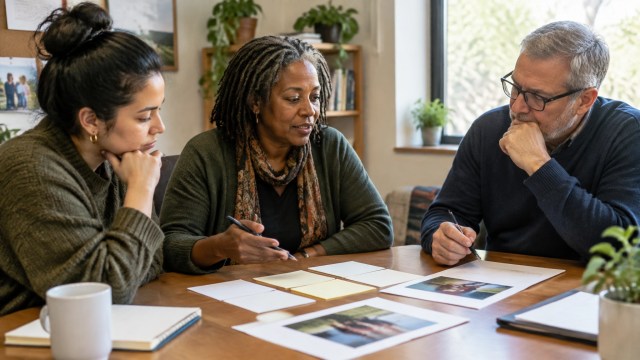
Title: Nonprofit staff plan donor outreach together.
Caption: A shared process helps a small team follow through.
Description: Three colleagues review outreach plans around a table in a bright office.
What should a personalized thank-you include?
A good thank-you is clear, accurate, and specific. It can include:
- The donor’s name and a genuine expression of gratitude.
- What the gift supports, using language approved by the organization.
- A short detail that reflects the donor’s relationship, when appropriate.
- The sender’s name and a simple way to reply.
Avoid sending one template to everyone. A first-time donor may need a warm introduction to the organization’s work. A recurring donor deserves thanks for steady support. A volunteer who also gives may appreciate recognition of both contributions.
Simple segmentation can help teams choose the right message and follow-up rhythm:
- First-time donors: Welcome them, explain the work, and plan a personal impact update.
- Recurring donors: Thank them for dependable support and watch for failed payments.
- Major donors: Use personal staff or leadership outreach; keep AI in a behind-the-scenes drafting role.
- Lapsed donors: Send a warm check-in without guilt or pressure.
- Volunteers who give: Recognize both their time and their financial support.
- In-kind and matching-gift donors: Confirm what was received or matched, and describe it accurately.
How can a nonprofit keep stewardship going all year?
Donor follow-up should not stop after the first thank-you. A simple stewardship calendar gives the team a reason to stay in touch without making every message an ask.
- A few weeks after the gift: Share a short impact note. AI can draft it from approved program updates.
- Later in the year: Send a story or photo update. AI can help shape the text; staff should confirm permissions and facts.
- Before the next appeal: Check in with a useful update rather than leading straight into a request.
- On the gift anniversary: Send a brief note recognizing when the donor first gave.
- When a donor becomes lapsed: Prepare a friendly re-engagement message and a reminder for a person to review it.
A lapsed donor note can be as simple as: “We’re grateful you were part of this work. Is there a program or update you’d especially like to hear about?” One thoughtful question is better than a guilt-driven appeal.
Show the work, not the pitch. Share a real, relevant update, and be honest about what the gift did and did not fund.

Title: A development director calls a donor.
Caption: A personal conversation can strengthen a donor relationship.
Description: A staff member listens on the phone while keeping notes at a desk.
How should a team watch recurring gifts?
A failed payment is not always a decision to stop giving. A card may expire or a payment may be declined. An AI employee can flag the problem and prepare a personal message for staff to review.
The note should explain that the payment could not be processed, offer a secure way to update payment details, and provide a contact for help. Never ask donors to send card details by email or enter payment information into an AI prompt. Thank donors when a payment is restored, too.
AI can also help find donors whose last gift was a long time ago and draft a gentle re-engagement message. Keep the tone warm. Do not imply that someone has failed the organization.
How can donor notes survive staff turnover?
Record meeting notes, call summaries, preferences, and agreed next steps in the donor’s contact record using plain language. For example: “Prefers email updates about the food program; follow up after the spring visit.”
AI can help summarize notes and suggest a next task, but a staff member should check the summary before it becomes part of the record. A shared record lets another teammate pick up the relationship if someone is away or leaves.
For ideas on using AI to support a lean nonprofit team, see our guides to keeping a nonprofit on budget with AI employees and helping volunteer coordinators recruit and support volunteers. Our articles on year-end giving and helping small churches stay connected offer related examples of small-team workflows.
The same follow-up discipline works outside fundraising: a home services company can confirm a job, a professional services firm can thank a referral source, a church can welcome a first-time guest, a healthcare practice can check in after a visit, and a retail shop can follow up on a repair or order.
At Aimee’s Marketing, AI helps create blog drafts, organize research, improve marketing campaigns, and assist with customer communication. Rather than replacing people, AI allows us to spend more time serving clients and developing new ideas.
What should nonprofits keep human?
AI can make stewardship more organized, but it has limits. Never let AI send a donor-facing message without human review. Major-donor conversations and gift-agreement discussions should stay with people.
Protect donor privacy. Before using a tool, check its data practices, access controls, and rules for storing or using information. Give the tool only the information it needs. Do not let automation make every note sound alike.
Check your organization’s gift-acknowledgment rules and any restrictions on how a gift may be described. Never claim a gift was used in a way it was not. A faster thank-you can support a real relationship; it cannot replace one.
How can a nonprofit start small?
Begin with the acknowledgment workflow. It is a useful first step because the task is clear and the risks are manageable when a person reviews every message.
- Write down how a gift currently moves from arrival to thank-you.
- Set rules for tone, privacy, access, and who approves messages.
- Run the workflow on one week of gifts.
- Track time-to-thank-you and how many gifts received a personal note.
- Review errors and staff feedback before expanding to other donor groups.
A nonprofit exploring how to hire a first AI employee can start by assigning a narrow task, such as drafting thank-you notes or creating follow-up reminders. AI employees, including options from Marblism, can help with repeatable work while staff stay responsible for donor relationships.
Simplified Summary
What is this article about?
It explains how AI can help nonprofits thank donors and follow up after gifts.
Why should I care?
Donors may feel forgotten when thanks and updates arrive late or never come.
How do I do it?
Start with one simple workflow. Let AI draft and track messages, then have a person check and send them.
What is the main goal?
Thank donors on time, share honest updates, and build lasting relationships.
Want to learn more about AI employees? Get started here. Interested in helping other organizations explore AI employees? Apply here.


