How AI Employees Help Real Estate Agents Run Smooth Open Houses and Follow Up Faster

Title: A real estate agent welcomes visitors to an open house
Caption: A warm greeting helps visitors feel comfortable asking questions.
Description: An agent welcomes a couple into a bright, tidy home during an open house.
Open houses remain one of the best ways for agents to meet buyers and sellers face to face. But preparing the home, hosting visitors, and following up can take up an entire weekend. And when follow-up is slow, interested visitors may move on.
AI employees for real estate agents can help manage the repeat work around an open house. They can organize checklists, prepare draft messages, and sort notes for review. The agent still brings the local knowledge, judgment, and personal welcome.
Open houses reward speed. Helpful beats flashy. The goal is not to automate the relationship. It is to make more room for it.
A six-part open house workflow
1. Before the open house: Get the details ready
An AI assistant can turn your event plan into a simple prep checklist. Include the tasks that are easy to forget:
- Set out signage.
- Prepare the sign-in method.
- Print property fact sheets.
- Arrange refreshments.
- Confirm the event time and access plan.
It can also draft social posts and short invitation notes for nearby neighbors. Review each draft before sharing it, and check that the time, address, property details, and wording are right.
For common property questions, provide the AI with approved listing facts only. It can draft clear answers about details such as room count or listed features. It should not guess about the home, the neighborhood, or anything not in the approved information.
If you use AI to prepare listing marketing, see how AI employees can help agents win more listings and save hours.
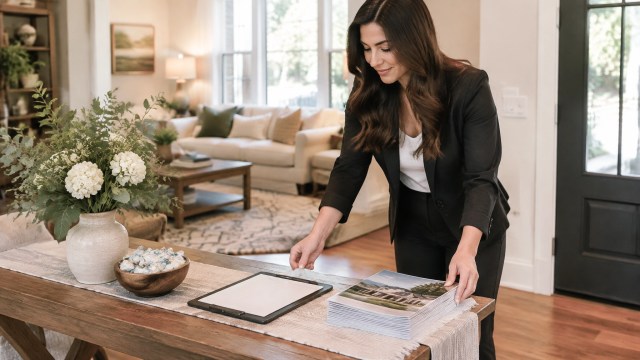
Title: Preparing a sign-in table before an open house
Caption: A tidy table makes it easy for guests to find property information.
Description: An agent arranges a simple sign-in setup, flyers, and refreshments before visitors arrive.
2. During the open house: Capture details and stay present
A simple digital sign-in can help keep visitor details organized. Make the process clear, and follow your brokerage’s rules for collecting and using that information.
AI can prepare a same-day thank-you note for each visitor and help answer general questions using approved listing facts. It can also flag a visitor’s request for a private showing or other clear next step, so the agent can respond personally.
Keep the agent in the conversation. AI should not make promises, negotiate, or decide who deserves attention. The point is to reduce busywork while the agent welcomes people and listens.
3. After the event: Match the message to the visitor’s stated interest
Within 24 hours, use notes and visitor-stated preferences to group follow-up into practical categories:
- Just looking: Send a brief thanks and offer to share information if they ask.
- Ready buyer: Follow up on a requested showing or specific question.
- Potential seller: Thank them for visiting and offer a conversation about their own plans.
- Curious neighbor: Share a relevant property update or invite them to ask a question.
AI can draft a message for each group. The agent should review the details and personalize the note. A visitor who asked for a second showing deserves a direct response from a person.
4. Use the 48-hour rule as a practical target
Interest can fade quickly after a visit. A personal reply while the open house is still fresh is more useful than a generic message sent a week later.
That does not mean sending repeated sales pitches. It means replying promptly, answering the question the visitor actually asked, and making one clear offer of help. For example:
Thanks for visiting today. You asked about the home’s listed features, so I’m sharing the property information here. Would you like to arrange a private showing?
AI can draft that note quickly. The agent checks the facts and makes sure it sounds like a real conversation. If the lead becomes a real transaction, see how AI employees can help keep real estate transactions on track from contract to closing.
5. Close the loop with the seller
After the event, AI can organize attendance details and summarize visitor feedback into a draft report for the seller. The agent reviews it before sending and removes anything that is unclear, private, or not useful.
A short, balanced summary can cover common questions, visitor comments about the property, and possible next steps. Avoid treating a handful of comments as a firm market verdict. The report should help the seller understand what happened, not promise a particular outcome.
6. Keep a clear message record
Track who received which message, when it was sent, and what follow-up was promised. This simple record helps prevent duplicate notes and conflicting information.
It also gives the agent a clear next step: call a visitor who asked for a showing, send a promised fact sheet, or stop messaging someone who asked not to hear from you. For longer-term nurturing beyond the open house, see how AI employees can help agents follow up with every lead without working nights.

Title: An agent writes follow-up notes after an open house
Caption: A timely note can answer a visitor’s question while the visit is still fresh.
Description: An agent uses a laptop at home to draft follow-up messages after an open house.
Honest limits: Keep people and fair housing at the center
AI can help with coordination. It should not make housing decisions or replace an agent’s judgment.
- Never screen or rank visitors based on personal characteristics. Do not use AI to infer who someone is or to decide who gets information or a showing. Keep treatment fair and consistent.
- Do not make promises. AI must not promise an offer, a sale price, a sale, or any result.
- Review every draft. Confirm names, property facts, and the next step before a message goes out.
- Protect visitor information. Collect only what you need, use approved tools, and follow brokerage rules for privacy, storage, access, and retention.
- Let a person read the room. AI cannot understand a hesitant visitor’s body language or build the trust that comes from a thoughtful conversation.
At Aimee’s Marketing, AI helps create blog drafts, organize research, improve marketing campaigns, and assist with customer communication. Rather than replacing people, AI allows us to spend more time serving clients and developing new ideas. For agents, AI can handle repeat coordination so people can focus on conversations and relationships.
How to start without adding more work
- Pick your next open house. Keep the first test small.
- List the repeat tasks. Note what you prepare, send, and record each time.
- Choose one low-risk task. Same-day thank-you drafts are a useful starting point.
- Set the review rule. Decide what AI may draft and what a person must approve.
- Test the workflow. Check accuracy, time saved, and whether follow-up felt more personal.
- Simplify if needed. If the setup takes longer than doing the task, make it easier or skip it.
Simple systems are easier to keep. Start with one task, learn what works, and expand only when it helps.
Simplified Summary
What is this article about?
It explains how AI employees can help real estate agents prepare for open houses and follow up with visitors.
Why should I care?
AI can help organize repeat tasks, so you have more time to speak with people.
How do I do it?
Pick one task, such as drafting thank-you notes. Check every draft before you send it.
What is the main goal?
Use AI to handle routine work while people lead the conversations.
Take the next step
Start with one task at your next open house. Keep people in charge of every message and decision.
Want to explore AI employees? Hire AI Employees. Want to help others use AI? Become a Marblism Partner.


